What to Search for in an Assisted Living Neighborhood: A Senior Care Buyer's Guide
Business Name: BeeHive Homes of Portales
Address: 1420 S Main Ave, Portales, NM 88130
Phone: (505) 591-7025
BeeHive Homes of Portales
Beehive Homes of Portales assisted living is ideal for those who value their independence but require help with some of the activities of daily living. Residents enjoy 24-hour support, private bedrooms with baths, medication monitoring, home-cooked meals, housekeeping and laundry services, social activities and outings, and daily physical and mental exercise opportunities. Beehive Homes memory care services accommodates the growing number of seniors affected by memory loss and dementia. Beehive Homes offers respite (short-term) care for your loved one should the need arise. Whether help is needed after a surgery or illness, for vacation coverage, or just a break from the routine, respite care provides you peace of mind for any length of stay.
1420 S Main Ave, Portales, NM 88130
Business Hours
Choosing an assisted living community is among those decisions that feels both useful and deeply individual at the exact same time. You are not simply buying a service. You are assisting to pick a home, a day-to-day rhythm, and a circle of individuals who will be present for your parent or loved one when you are not.
I have walked through dozens of communities with families, often with a sense of relief, often in tears, in some cases in peaceful resignation after a hospital discharge left them no time at all to strategy. The difference between an excellent fit and a poor one shows up in small details: how staff greet homeowners, whether call lights are addressed without delay, whether somebody notices that your mother hates carrots and quietly swaps them out without fuss.
This guide is suggested to assist you see those information and ask sharper concerns, so you can evaluate assisted living and other senior care options with clear eyes instead of shiny brochures.
Start With Requirements, Not With the Brochure
Before you tour a single assisted living structure, sit down and write out what day-to-day assistance is actually needed. Households often begin with an unclear sense of "Mom needs more help" or "Dad is lonesome," then feel overwhelmed by all the amenities and sales language.
Think in concrete, observable terms. For instance: "She requires aid bathing and getting dressed every early morning," or "He forgets his medications a minimum of twice a week," or "She can not manage stairs safely."
For most households, the core factors to explore assisted living or other kinds of elderly care fall into a couple of broad categories:
- Personal care: help with bathing, grooming, dressing, toileting, getting in and out of bed or chairs.
- Health and medication: medication pointers or administration, persistent illness tracking, support after hospitalization or surgery.
- Safety: fall danger, roaming, leaving the range on, blending medications, driving issues.
- Daily structure: routine meals, social contact, hydration, activities, sleep routine.
- Caregiver stress: a partner or adult child is exhausted or physically not able to continue supplying the required level of care.
Even a short composed summary of these requirements will keep you and any sales representative on track. It likewise assists differentiate whether assisted living, memory care, or a various kind of senior care may fit better. An individual who is mainly independent however isolated might thrive with meals, housekeeping, and social activities. Someone with sophisticated dementia or heavy medical requirements may require a various setting like memory care or proficient nursing.
Bring that needs list with you on trips, and see whether the community discusses their services in a way that links straight to your particular scenario, not just to generic "elderly care."
Understanding What Assisted Living Actually Provides
Families often assume that assisted living is either "simply an apartment or condo with meals" or "almost like a nursing home." In truth, it sits in the middle, which middle differs by state and by provider.
Most assisted living communities concentrate on:
- Providing a house or suite with some level of privacy.
- Offering meals, housekeeping, and laundry.
- Supporting residents with individual care tasks and medication.
- Supporting socializing through activities, outings, and shared spaces.
Assisted living is normally not designed for residents who need 24-hour hands-on nursing, ventilators, substantial injury care, or intensive habits management. Regulations differ by state, but the basic philosophy is to support as much self-reliance as possible with a safety net, rather than to operate like a small hospital.
Ask directly: "What cannot you safely look after here?" The sincere communities will have a clear answer. For example, they may say they can not safely support homeowners who are bedbound, who require 2 personnel to transfer at all times, or who have unchecked aggressiveness. You need to know where the limits are before a crisis occurs.
Using Respite Care as a Test Drive
Many assisted living neighborhoods offer respite care: short stays that can last from a few days up to a few weeks, often longer. These can be exceptionally useful.
I have seen respite stays utilized for several functions:
- A safe location for an older adult while a spouse has surgery or travels.
- A "trial run" to see whether communal living is a good fit.
- A bridge after hospitalization when going straight home feels risky.
Unlike permanent moves, respite care is generally provided, much shorter term, and all-inclusive. You get a glance into real life there: how personnel speak to citizens in the evening, how often activities occur as scheduled, how the food tastes on a Tuesday, not simply at a grand opening event.
If you are unsure whether your parent will accept the concept of assisted living, framing it as a "short stay while you get more powerful" or "a chance to rest while the household regroups" is often less threatening. Some homeowners who withstood the move later on tell their households, "I believe I will stay, really. It is simpler here."
When you ask about respite, clarify whether respite residents receive the exact same level of staffing and attention as long-term citizens. They should. If the respite spaces are on a different floor, visit that area particularly. It tells you a lot about how the community values short-stay homeowners and, by extension, future long-term residents.
Staffing: The Distinction You Feel at 7 p.m., Not on the Tour
The glossy lobby does not help when someone requires assistance to the bathroom and nobody answers the call bell. Staff levels and culture are where assisted living is successful or fails.
Salespeople typically estimate staff-to-resident ratios, but these can be deceptive or cherry-picked. Dig deeper.
Ask particular concerns such as:
- How lots of caretakers are on each shift, including over night, and how many homeowners do they care for?
- Are nurses on site 24/7, or on call after particular hours?
- How frequently are agency or short-term staff used?
- What is the average length of work for caregivers and nurses here?
I as soon as toured a stunning assisted living community with a family. The director happily shared their activity calendar and restaurant-style dining. When we quietly asked caregivers in the hall the length of time they had worked there, 2 said "simply begun this week" and another said "less than a month." There had been turnover in leadership and personnel, which indicated even the very best policies on paper were not yet in practice. The household wisely chose to wait and watch how things stabilized.
Also focus on how personnel engage with existing homeowners. Do they know names without taking a look at charts? Do they crouch down to be at eye level when speaking? Do locals appear relaxed when personnel go into, or tense and guarded?
A structure can compensate for some drawbacks with a strong, stable group. The reverse is rarely true.
Safety, Health, and Medication Management
Safety is often the tipping point that brings families to assisted living, so it is worthy of more than a checkbox.
On your visit, try to find useful details: grab bars in bathrooms, non-slip floor covering, hand rails along corridors, sufficient lighting, and clear signs that an individual with moderate cognitive impairment can follow. Observe whether homeowners use their walkers and canes consistently, or whether you see lots of walking unassisted but unsteady. A culture that stabilizes making use of movement aids tends to avoid more falls.
Medication management is another cornerstone of senior care. Some communities just advise locals to take prefilled tablets, while others fully handle prescriptions, reordering, and administration. Clarify:
- Who sets up and administers medications, and what training do they have?
- How are medication mistakes reported and tracked?
- What occurs if a resident declines medications?
- Can the community handle injectables like insulin, or complex regimens?
Another key area is how the community handles urgent medical concerns. They are not health centers, but they ought to have clear procedures. Ask how frequently they call 911, what occurs if a resident falls overnight, and how they notify families. Ask whether a nurse evaluates homeowners after every fall or health event, or whether that depends upon the situation.
Pay attention to how candid the staff are. You desire a neighborhood that confesses that falls and health problems take place, however takes prevention and follow-up seriously.
Lifestyle: Every day life Beyond the Features Sheet
A complete activity calendar looks impressive, however the truth you desire is easy: does your parent have genuine chances every day to be engaged, comfortable, and, sometimes, delighted?
Try to visit throughout a mealtime and one other time, such as mid-morning or mid-afternoon. Notification whether:
Residents exist and engaged, or primarily in their rooms with doors closed.
Activities seem occurring as arranged, with more than one or two participants. Personnel gently invite quieter citizens to sign up with, or focus just on the most outgoing.Think about your specific loved one. A retired engineer may take pleasure in brain video games, discussion groups, or a woodworking club more than crafts. An introvert might value a peaceful library and a walking path over large group bingo. An older grownup with visual disability might care more about audiobooks and large-print products than live entertainment.
Ask if they change activities for mobility and cognition. An excellent activity director can adapt a card video game for somebody with shaky hands, or involve a resident who tires easily for just twenty minutes rather than a full hour.
Do not neglect the quieter elements of day-to-day living: how the community handles mail, whether there is a location for residents to garden, whether pets are enabled, and how laundry is marked to avoid mix-ups. These small patterns form lifestyle even more than the periodic unique event.
Rooms, Shared Areas, and Dining
Apartments in assisted living range from simple studios to two-bedroom units with kitchen spaces. Some households focus greatly on square video, yet the layout typically matters more than raw size.
Visit a minimum of two room types. Take notice of:
Natural light and window views. These affect state of mind even more than people expect.
Bathroom design, particularly the space for walkers or wheelchairs, height of toilets, and existence of grab bars. Closet area and how simple it will be to organize clothing and personal products.Shared senior living spaces tell you how people actually live in the building. Are citizens using lounges and outdoor patios, or are these mostly for show? Exists a quiet location for reading or a noisy TV blasting in every typical space? Can locals get a cup of coffee or tea without asking personnel for every step?
Dining typically makes or breaks a resident's fulfillment. Attempt to eat a meal there. Taste matters, but so do consistency, flexibility, and dignity. Ask whether meals are plated in the kitchen area or at the table, whether special diet plans like low sodium or diabetic meals are offered, and how they handle locals with swallowing difficulties.
A red flag: citizens waiting a very long period of time to be served while personnel chat among themselves, or plates gotten rid of before individuals finish. For someone who consumes gradually, rushed meal service can rapidly result in weight loss.
Money, Pricing Models, and Contracts
Assisted living is costly. Total monthly costs typically rival a home loan, and they are usually private pay, at least at first. Understanding how prices works is critical, both for today and for future years.
Most neighborhoods utilize one of three models:
- All-inclusive: One rate covers lease, meals, and a set level of care. Increases take place regularly, in some cases annually.
- Base rate plus care levels: Rent and basic services are one cost, then care is billed as "Level 1, Level 2, Level 3," each with its own cost.
- A la carte: Each service such as medication management, bathing assistance, or escorts to meals has its own line item.
Ask them to stroll you through a practical month-to-month overall for your parent as they are right now, not the minimum package. If they state, "Most people pay between X and Y," ask what features differ in between those quantities. Ask how often care level evaluations take place and how they notify you of increases.
This is where the fine print matters. It deserves producing a short agreement review checklist for yourself.
Here is a concentrated list of contract details that generally are worthy of mindful attention:
- Notice needed for lease or care level increases, and the typical size of past increases.
- Conditions under which the neighborhood can require a move to a higher level of care or a different setting.
- Refund or credit policy if a resident moves out or passes away mid-month.
- Responsibility for personal property, consisting of theft or damage, and any requirement for renter's insurance.
- Minimum stay requirements, deposit terms, and any non-refundable fees.
If you feel pressured to sign quickly with promises that "we can always change things later," decrease. The trustworthy neighborhoods anticipate questions. They can plainly describe what is negotiable and what is not.
Red Flags to Enjoy For
Assisted living trips are designed to reveal the very best side of a community. Your task is to observe the gaps between the marketing and the lived reality.
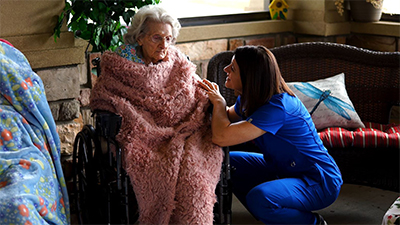
Some warning signs are subtle; others must stop you in your tracks:
Repeated strong smells of urine or feces in common locations, not just occasional accidents.
Locals parked in wheelchairs in corridors without any engagement for long stretches. Personnel discussing citizens in front of them as if they are not there. Activity calendars filled with occasions that clearly are not taking place during your visit. Confused or inconsistent responses from different personnel about basic procedures.
Another warning is poor communication when you simply attempt to arrange a tour. If messages are not returned, if no one can respond to fundamental questions about expenses, or if your visit feels disorderly and hurried, envision what that appears like on a typical weekday evening when there is no potential brand-new customer watching.
Trust your instincts. Households in some cases say, "I can not put my finger on it, but something felt off." Notice that, then back it up with more questions.
When Dementia or Cognitive Change Is Part of the Picture
Many locals in assisted living have some degree of memory loss or cognitive change, whether formally diagnosed or not. That truth ought to notify what you look for.
If your loved one currently has a diagnosis of dementia, ask straight how many locals in the building have similar requirements and how staff are trained to support them. Some neighborhoods have safe and secure memory care units; others serve individuals with moderate to moderate dementia in regular assisted living.
Key questions consist of:
How they manage wandering or exit-seeking.
How they redirect residents who are agitated, nervous, or repetitive. How they partner with households on behavioral changes or development of disease.Look for visual hints such as memory boxes outside apartment or condo doors, contrasting colors in between floorings and walls to help depth understanding, and easy signage. These details show whether the neighborhood has actually thought about cognitive aging beyond lip service.
Ask whether they expect your loved one to remain in assisted living throughout the course of dementia, or whether there is a point at which a transfer to memory care or knowledgeable nursing would be needed. Preparation for that possibility now is far less painful than responding in a crisis.
Working With Your Own Limits As a Caregiver
Many families stroll into assisted living guilt-ridden. A spouse may feel they are "breaking a guarantee" to care for their partner in your home till the end. Adult kids in some cases see a parent's move as a reflection on their own schedule or love.
Here is the tough fact gained from years in senior care: physical care needs and safety risks do not pause to safeguard household promises. At some point, what one person can safely do at home, even with outdoors aid, is simply not enough.
A great community does not change you. It widens the team. It offers structure to the parts of care that are hardest to sustain every day: the night-time restroom trips, the continuous medication reminders, the meals, the monitoring for falls. That frees you to focus more on your relationship and less on being the only safety net.
If you utilize respite look after a trial stay, pay attention not only to how your parent does, however likewise to how you feel. Sleep. Notice whether your own health or state of mind starts to enhance. Those are information points, not extravagances. Burned-out caregivers make more errors, and that impacts everyone.
Practical Methods for Exploring Communities
A couple of small methods can make your visits more useful and less overwhelming.
Consider this concise on-site list when you stroll through a possible assisted living community:
- Arrive fifteen minutes early and wait in a common area to observe unfiltered interactions.
- Ask to see a room that is ready but not specifically staged and another presently occupied (with the resident's approval).
- Stop and chat with a minimum of 2 current citizens and one relative if possible.
- Visit at least once in the evening or on a weekend when fewer managers are present.
- Take written notes within an hour of leaving, while impressions are fresh.
If a neighborhood hesitates to let you speak to existing homeowners or insists you can only visit during narrow "tour times," probe the factors. There might be a legitimate description, but it is worth understanding.
Whenever possible, bring your parent or loved one on a minimum of one visit. Even when cognition suffers, individuals frequently pick up on atmosphere. They may not remember details, but they keep in mind how they felt. Enjoy body movement. Do they relax, smile, engage with others, or withdraw and tighten up?
Bringing Everything Together
Choosing assisted living, respite care, or any senior care setting is rarely a clean, direct choice. Requirements change. Household characteristics matter. Financial resources form choices. There is no ideal option, just the very best fit readily available within your real-world constraints.
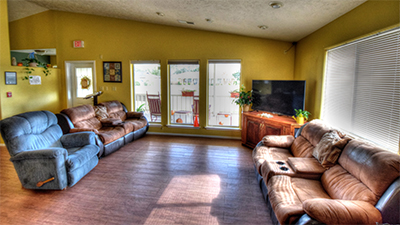
Use what you see, hear, and feel: the concrete details about staffing and safety, the legal fine print, and the quieter observations from hallways and dining rooms. Balance the facilities versus what your loved one really worths. Treat respite care as an effective tool, not a last resort.
Above all, keep in mind that you are not simply buying a bed and a meal plan. You are choosing partners in elderly care, people who will witness small, intimate moments in the last chapters of a life story. Take the time to discover those who appreciate that obligation as much as you do.
BeeHive Homes of Portales provides assisted living care
BeeHive Homes of Portales provides memory care services
BeeHive Homes of Portales provides respite care services
BeeHive Homes of Portales supports assistance with bathing and grooming
BeeHive Homes of Portales offers private bedrooms with private bathrooms
BeeHive Homes of Portales provides medication monitoring and documentation
BeeHive Homes of Portales serves dietitian-approved meals
BeeHive Homes of Portales provides housekeeping services
BeeHive Homes of Portales provides laundry services
BeeHive Homes of Portales offers community dining and social engagement activities
BeeHive Homes of Portales features life enrichment activities
BeeHive Homes of Portales supports personal care assistance during meals and daily routines
BeeHive Homes of Portales promotes frequent physical and mental exercise opportunities
BeeHive Homes of Portales provides a home-like residential environment
BeeHive Homes of Portales creates customized care plans as residents’ needs change
BeeHive Homes of Portales assesses individual resident care needs
BeeHive Homes of Portales accepts private pay and long-term care insurance
BeeHive Homes of Portales assists qualified veterans with Aid and Attendance benefits
BeeHive Homes of Portales encourages meaningful resident-to-staff relationships
BeeHive Homes of Portales delivers compassionate, attentive senior care focused on dignity and comfort
BeeHive Homes of Portales has a phone number of (505) 591-7025
BeeHive Homes of Portales has an address of 1420 S Main Ave, Portales, NM 88130
BeeHive Homes of Portales has a website https://beehivehomes.com/locations/portales/
BeeHive Homes of Portales has Google Maps listing https://maps.app.goo.gl/1xZDfURp3wt4uv3T6
BeeHive Homes of Portales has TikTok page https://tiktok.com/@beehive.home.of.portales
BeeHive Homes of Portales has an YouTube page https://www.youtube.com/@WelcomeHomeBeeHiveHomes
BeeHive Homes of Portales has Facebook page https://www.facebook.com/BeeHiveHomesOfPortales
BeeHive Homes of Portales has Instagram page https://www.instagram.com/beehivehomesofportales/
BeeHive Homes of Portales won Top Assisted Living Homes 2025
BeeHive Homes of Portales earned Best Customer Service Award 2024
BeeHive Homes of Portales placed 1st for New Mexico Senior Living Communities 2025
People Also Ask about BeeHive Homes of Portales
What is BeeHive Homes of Portales Living monthly room rate?
The rate depends on the level of care that is needed. We do a pre-admission evaluation for each resident to determine the level of care needed. The monthly rate is based on this evaluation. There are no hidden costs or fees
Can residents stay in BeeHive Homes of Portales until the end of their life?
Usually yes. There are exceptions, such as when there are safety issues with the resident, or they need 24 hour skilled nursing services
Do we have a nurse on staff?
No, but each BeeHive Home has a consulting Nurse available 24 – 7. if nursing services are needed, a doctor can order home health to come into the home
What are BeeHive Homes of Portales's visiting hours?
Visiting hours are adjusted to accommodate the families and the resident’s needs… just not too early or too late
Do we have couple’s rooms available?
Yes, each home has rooms designed to accommodate couples. Please ask about the availability of these rooms
Where is BeeHive Homes of Portales located?
BeeHive Homes of Portales is conveniently located at 1420 S Main Ave, Portales, NM 88130. You can easily find directions on Google Maps or call at (505) 591-7025 Monday through Sunday 9:00am to 5:00pm
How can I contact BeeHive Homes of Portales?
You can contact BeeHive Homes of Portales by phone at: (505) 591-7025, visit their website at https://beehivehomes.com/locations/portales/ or connect on social media via TikTok Facebook or YouTube
Take a drive to Do Drop In Cafe. Do Drop In Café offers a welcoming diner atmosphere ideal for assisted living, memory care, senior care, elderly care, and respite care breakfasts or lunches.